jueves, 23 de agosto de 2018

Reformation


Reformation, also called Protestant Reformation, the religious revolution that took place in the Western church in the 16th century. Its greatest leaders undoubtedly were Martin Luther and John Calvin. Having far-reaching political, economic, and social effects, the Reformation became the basis for the founding of Protestantism, one of the three major branches of Christianity.


The cause of the reformation
A.The Abandonment of Rome by the Popes
B.The Rise of Nationalism
C. The Black Death
D. The Decline of Latin
E. Corruption in the Church

Catholic Reformation: The Catholic Reformation was the intellectual counter-force to
Protestantism. The desire for reform within the Catholic Church had started before the
spread of Luther.


The Renaissance

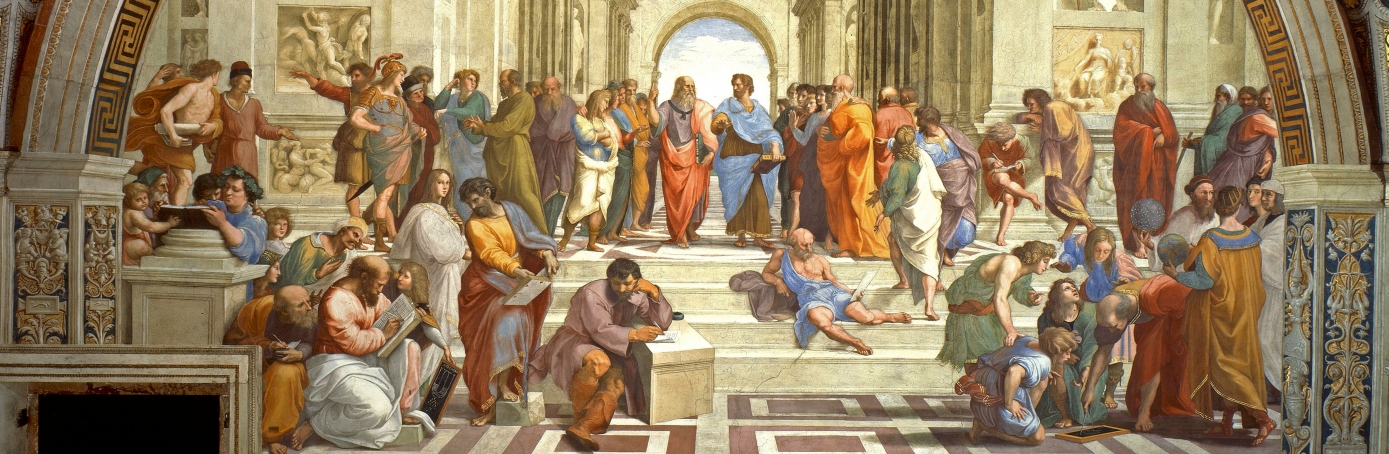
Renaissance period in European civilization immediately following the Middle Ages and conventionally held to have been characterized by a surge of interest in Classical scholarship and values. The Renaissance also witnessed the discovery and exploration of new continents, the substitution of the Copernican for the Ptolemaic system of astronomy, the decline of the feudal system and the growth of commerce, and the invention or application of such potentially powerful innovations as paper, printing, the mariner’s compass, and gunpowder. To the scholars and thinkers of the day, however, it was primarily a time of the revival of Classical learning and wisdom after a long period of cultural decline and stagnation.
Resultado de imagen para renaissance

Artistic Developments And The Emergence Of Florence

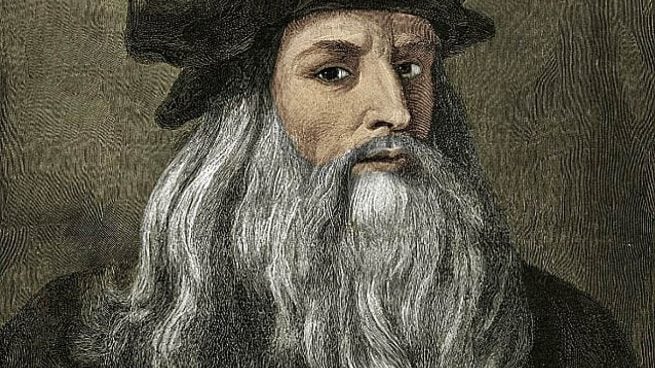
It was in art that the spirit of the Renaissance achieved its sharpest formulation. Art came to be seen as a branch of knowledge, valuable in its own right and capable of providing man with images of God and his creations as well as with insights into man’s position in the universe. In the hands of men such as Leonardo da Vinci it was even a science, a means for exploring nature and a record of discoveries. Art was to be based on the observation of the visible world and practiced according to mathematical principles of balance, harmony, and perspective, which were developed at this time. In the works of painters such as Masaccio, the brothers Pietro and Ambrogio Lorenzetti, Fra Angelico, Sandro Botticelli, Perugino, Piero della Francesca, Raphael, and Titian; sculptors such as Giovanni Pisano, Donatello, Andrea del Verrocchio, Lorenzo Ghiberti, and Michelangelo; and architects such as Leon Battista Alberti, Filippo Brunelleschi, Andrea Palladio, Michelozzo, and Filarete, the dignity of man found expression in the arts.
Resultado de imagen para leonardo da vinci

In Italy the Renaissance proper was preceded by an important “proto-renaissance” in the late 13th and early 14th centuries, which drew inspiration from Franciscan radicalism. St. Francis of Assisi had rejected the formal Scholasticism of the prevailing Christian theology and gone out among the poor praising the beauties and spiritual value of nature. His example inspired Italian artists and poets to take pleasure in the world around them. The work of the most famous artist of the proto-renaissance period, Giotto (1266/67 or 1276–1337), reveals a new pictorial style that depends on clear, simple structure and great psychological penetration rather than on the flat, linear decorativeness and hierarchical compositions of his predecessors and contemporaries, such as the Florentine painter Cimabue and the Siennese painters Duccio and Simone Martini. The great poet Dante lived at about the same time as Giotto, and his poetry shows a similar concern with inward experience and the subtle shades and variations of human nature. Although his Divine Comedy belongs to the Middle Ages in its plan and ideas, its subjective spirit and power of expression look forward to the Renaissance. Petrarch and Giovanni Boccaccio also belong to this proto-renaissance period, both through their extensive studies of Latin literature and through their writings in the vernacular. Unfortunately, the terrible plague of 1348 and subsequent civil wars submerged both the revival of humanistic studies and the growing interest in individualism and naturalism revealed in the works of Giotto and Dante. The spirit of the Renaissance did not surface again until the 15th century.


The Renaissance and the Scientific Revolution


Newton biography
Isaac Newton was an English scientist, born on Christmas Day in 1642 of the ancient calendar. His mother prepared a farmer's future for him. but then he convinced himself that his son had talent and sent him to the University of Cambridge, where to pay for his studies he started working.
Resultado de imagen para newton
Newton's law of gravity
statement that any particle of matter in the universe attracts any other with a force varying directly as the product of the masses and inversely as the square of the distance between them. In symbols, the magnitude of the attractive force F is equal to G (the gravitational constant, a number the size of which depends on the system of units used and which is a universal constant) multiplied by the product of the masses (m1 and m2) and divided by the square of the distance R: F = G(m1m2)/R2. Isaac Newton put forward the law in 1687 and used it to explain the observed motions of the planets and their moons, which had been reduced to mathematical form by Johannes Kepler early in the 17th century.

Resultado de imagen para newton's law of gravity

Rene Descartes biography
It was born on March 31 of the year 1596 in La Hayce, a town of Touraine, France, today known by the name of descartes, in his honor. were his parents joachim descartes, official of the breton parlamment, and jeanne brochard.
As a child, his father began to call him his "little philosopher" because little René spent the day asking questions.
From 11 to 16 years of age he studied at Collège Henri IV de La Flèche. There he learned physics and scholastic philosophy, Latin, Greek, astronomy, music, architecture and showed a remarkable interest in mathematics.
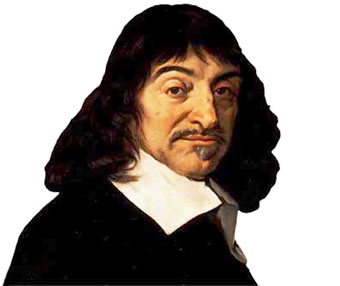
Resultado de imagen para rene descartes

contributions of Rene

  • The Cartesian Method: Decompose complex problems into simpler parts; as many times as necessary until finding comprehensible solutions that allow to solve then the original problem.


  • The Methodical Doubt: Use doubt as a fundamental tool to achieve knowledge. Through the questioning of acquired and accepted knowledge, it is possible to reconstruct the knowledge needed to understand the world.

Nicolaus Copernicus biography 

He was born on thorn in 1473. At the age of 10 years old he was a orphan . He had a very good education in good universities 

contributions of Nicolaus 
  • Develop the heliocentric theory.
  • I have discovered that the Earth revolved around the Sun and not the other way around, as in its time it was believed.
  • Discover that the Earth rotated completely on itself every 24 hours.
  •  Show that the Earth made a complete return to the Sun in cycles of one year.

Resultado de imagen para nicolas copernico biografia


Francis Bacon
(London, 1561 - 1626) English philosopher and politician. His father was a high magistrate in the government of Isabel I, and was educated by his mother on the principles of Calvinist puritanism. He studied at Trinity College in Cambridge and in 1576 he entered the Gray's Inn in London to study law, although a few months later he went to France as a member of a diplomatic mission.
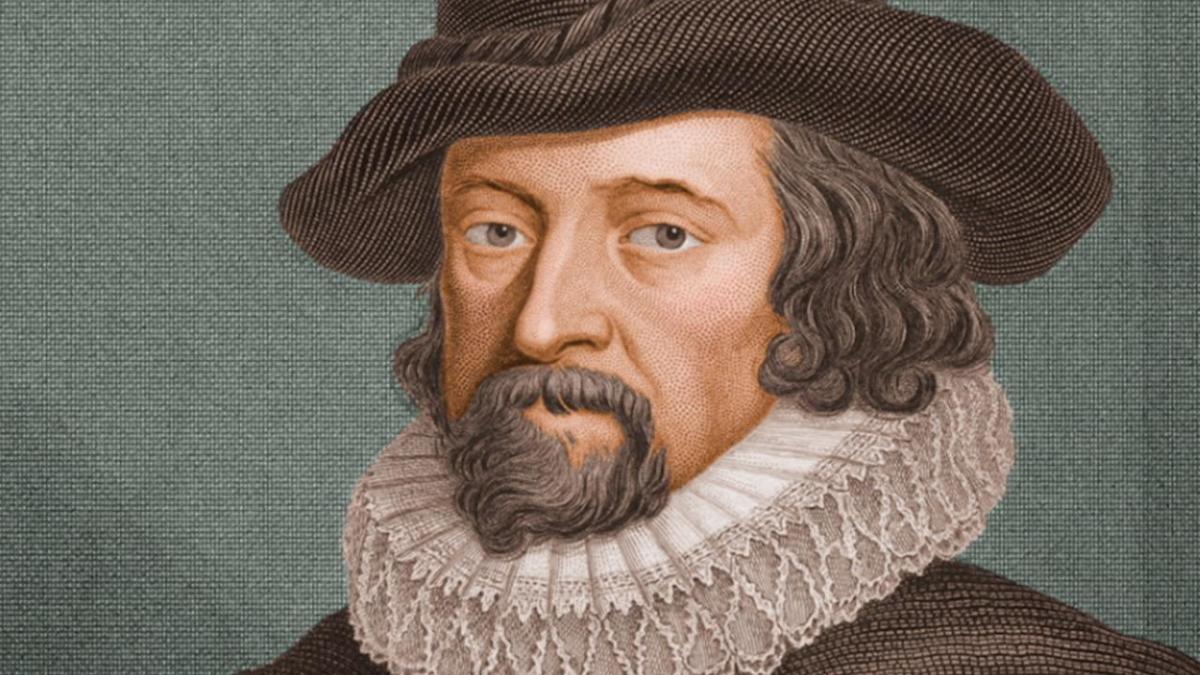
Resultado de imagen para francis bacon


Galileo Galilei biography
Galileo Galilei (1564-1642), was an Italian astronomer, scientist and philosopher, who played a key role in the Scientific Revolution. Galileo improved the telescope and made many significant discoveries in astronomy. His findings encouraged him to speak for the Copernican theory that the earth revolved around the sun. However, his opinions were considered heretical, and he was placed under house arrest. His larger scientific works included two new sciences on kinetics and the strength of materials.

Galileo was born in Pisa, Duchy of Florence, Italy in 1564 from a poor but noble family.
Resultado de imagen para galileo galilei biografia corta


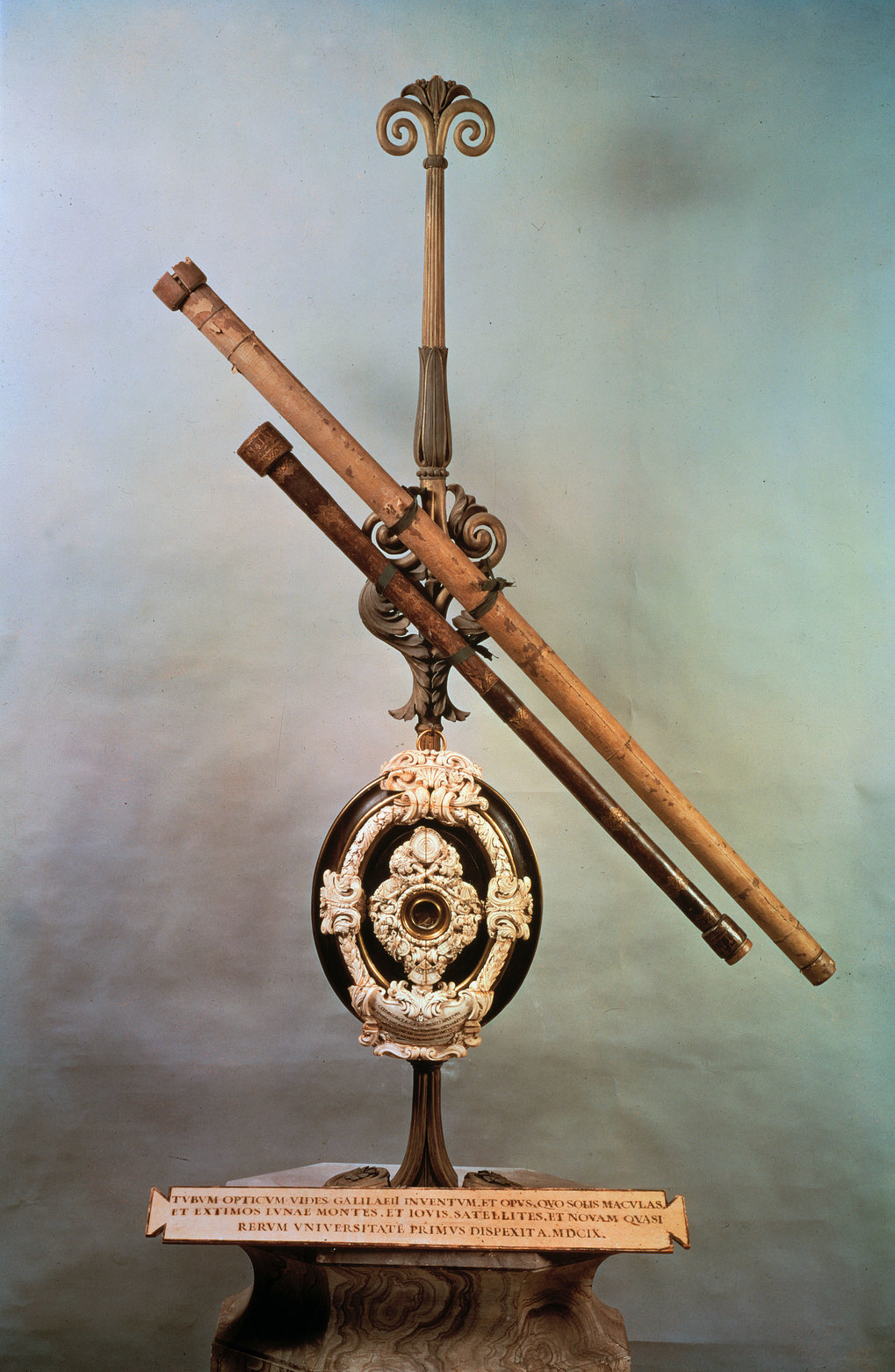
galileo galilei telescope
In 1609 Galileo revolutionized the world with his new invention, a telescope able to reach the moon and discover the satellites orbiting Jupiter, something unthinkable in the heyday of the Holy Inquisition, contrary to scientific advances and progress. We are in full Scientific Revolution, seventeenth century.


Resultado de imagen para galileo galilei telescope


Lutheranism, Calvinism and Anglicism

Martin Luther 
Biography
Martin Luther was born 10 November 1483, in Eisleben, Saxony - modern day Germany. His father was relatively wealthy and paid for his son to gain an education in Magdeburg and Eisenach.
In 1501, Martin Luther became a student at the University of Erfurt. At the request of his father, he took law, but he soon abandoned law, preferring to study Aristotle and the subjects of philosophy and theology. Despite admiring aspects of Aristotle and the classics, he was unsatisfied with just reason and intellectual studies and decided to become a monk so he could devote his life to God.
His time as a monk was challenging. Luther engaged in severe austerities fasting, long hours of prayer and frequent confession, but he felt an inner spiritual dryness. He became very critical of his own failings and felt his sinful nature becoming magnified rather than transformed. Sharing his difficulties, his spiritual director gave him more work so he wouldn’t become so introspected.
As well as being aware of his own failing, he became increasingly concerned about malpractice within the church, which he felt was not in keeping with Biblical scripture. In 1510, he visited Rome on behalf of Augustinian monasteries and was shocked at the level of corruption he found.
In 1517, Martin Luther first protested to the Catholic church about the sale of indulgences. Martin Luther argued that is was faith alone that could provide the remission of sin and not monetary payments to the church.

Resultado de imagen para lutheranism

Lutheranism is based on the teachings of Martin Luther, a German monk and professor who has been called the "Father of the Reformation." In 1517, he famously protested against the Roman Catholic Church and their sale of indulgences. In his sermons and writings, Luther stressed the doctrine of justification by faith alone and the authority of scripture alone.

Resultado de imagen para lutheranism
John calvin
John Calvin  was a French theologian who was instrumental in the Protestant Reformation and who continues to hold wide influence today in theology, education, and even politics. 
Resultado de imagen para john calvin
calvinism Calvinism is a denomination of Protestantism that adheres to the theological traditions and teachings of John Calvin and other preachers of the Reformation-era. Calvinists broke from the Roman Catholic Church in the 16th century, having different beliefs of predestination and election of salvation, among others.
Calvin believed that salvation is only possible through the grace of God. Even before creation, God chose some people to be saved. This is the bone most people choke on: predestination. Curiously, it isn't particularly a Calvinist idea. Augustine taught it centuries earlier, and Luther believed it, as did most of the other Reformers. Yet Calvin stated it so forcefully that the teaching is forever identified with him. Calvin said it was clearly taught in the Bible. For Calvin, God was above all else sovereign. Like all the Reformers, he hated the way Catholicism had degenerated into a religion of salvation-by-works. So Calvin's constantly repeated theme was this: You cannot manipulate God, nor put Him in your debt. If you are saved, it is his doing, not your own. He believed God alone knows who is elect saved and who isn't. But, Calvin said, a moral life shows that a person is probably one of the elect. Calvin himself was intensely moral and energetic, and he impressed on others the need to work out their salvation - not to be saved but to show they are saved. This emphasis on doing, on acting to transform a sinful world, became one of the chief characteristics of Calvinism.

Anglicism 


Columbus voyages

Colombus Voyage

During his long stay in Jamaica, Columbus and his men suffered from hunger and many privations. Just on June 26, 1504, a boat arrived to rescue him and take him to Santo Domingo. Here he arrived on August 13 and a month later he sailed for Spain in an old rented caravel. He arrived at San Lucar de Barrameda on November 7, 1504, sick, sad and defeated.

The voyages of Columbus, The four voyages of Columbus began the Spanish colonization of the Americas.
Resultado de imagen para mapas de los 4 viajes de cristobal colon

first trip of Christopher colon
Cristóbal Colón sailed from Puerto de Palos on August 3, 1492 with the ships Santa María, Pinta and Niña. He anchored on the island of Gran Canaria to ship supplies and on September 6 resumed the crossing of the Atlantic Ocean.

At dawn on October 12, 1492 the sailor Rodrigo de Triana, from the "Pinta" saw a hill lit by the moon and shouted "Earth, land!". At dawn Columbus landed on the island of Guanahani (Bahamas) and baptized it as "San Salvador".


On October 27, Columbus arrived on the island of Cuba and called it "Juana". On December 6 he arrived at the island of Santo Domingo and called it "La Española". Here, on the night of December 25, the "Santa María" ran aground and with its remains the "La Navidad" fort was built. Here he left 40 men and on January 2, 1493 he started returning to Spain.

Resultado de imagen para el primer viaje de cristobal colon

Second trip of Christopher Columbus
Christopher Columbus set sail from Cádiz on September 25, 1493. His 17 ships and 1,500 men sailed through the Atlantic Ocean until November 3 when they reached the island of Dominica, in the Caribbean Sea. Then they skirted the islands of Monserrat, Antigua, Nevis, San Cristóbal and Vírgenes. On November 19, 1493, they arrived on the island of Puerto Rico, which Columbus called San Juan Bautista. Then, he headed towards the island of Hispaniola (Santo Domingo).
Resultado de imagen para second voyages columbus Upon arriving, Columbus found the Christmas fortress destroyed and its 39 Christians dead. The natives attacked them for the thefts and abuses they committed. On January 2, 1494, he founded the city of La Isabela. On March 12, he started an expedition to the Cibao region, where he founded the Santo Tomás fort and left 50 men. There were clashes with the Indians and he did not find the gold he wanted.

On April 29, Columbus arrived in Cuba and on May 5 he discovered Jamaica. When returning to the Isabela and found the rebellious Indians and repressed them bloody. Later, he founded several forts and continued searching for gold, until March 10, 1496, set sail for Spain.

third trip of Christopher colon
Christopher Columbus sailed from San Lúcar de Barrameda on May 30, 1498. His 8 ships went to the Cape Verde Islands and from here they went west. After crossing the Alántico, on July 31 he discovered Trinidad Island and the next day he arrived in Venezuela, in South America. Then he took a north course towards Hispaniola.
Resultado de imagen para third voyage of columbus
Upon arriving in the city of Santo Domingo, he found many settlers unhappy with the government of his brother Bartolomé Colón and tired of the work and lack of wealth. Many sent emissaries and letters to Spain accusing the Columbus brothers of conspiring against the Spanish Crown because of their status as foreigners. Upon learning, the Catholic Kings, sent as judge to Francisco de Bobadilla, who, arriving in August 1500, ordered Christopher Columbus and his brothers Bartolomé and Diego arrested.
The three were shipped to Cádiz (Spain), where they arrived chained on November 25, 1500. Shortly after they were released by Queen Isabella the Catholic but Christopher Columbus was suspended their privileges obtained in the Capitulation of Santa Fe.

fourth trip of Christopher colon
Christopher Columbus sailed from Cádiz on May 9, 1502, commanding four caravels. It crossed without problems the Atlantic Ocean and on June 5 it anchored in the island Martinique. Then he skirted Hispaniola and Jamaica. From here he crossed to the southwest and on July 30 he arrived in Honduras. Here his flotilla suffered severe storms and his joints ached again.

Columbus continued navigating to the south, discovering the coasts of Nicaragua and Costa Rica. When Panama explored the indigenous attacks forced him to leave his coasts. On May 12 he arrived at Jardines de la Reina archipelago, near Cuba. Shortly thereafter he went to Jamaica, where he arrived on June 25, 1503. Upon seeing his battered ships, his men exhausted and without food, he sent a flotilla of canoes under Diego Méndez heading for Santa Domingo, in La Española, to ask help.


Resultado de imagen para mapas de los 4 viajes de cristobal colon


Reformation

Reformation Reformation , also called Protestant Reformation, the religious revolution that took place in the Western church in the 16t...