Renaissance period in European civilization immediately following the Middle Ages and conventionally held to have been characterized by a surge of interest in Classical scholarship and values. The Renaissance also witnessed the discovery and exploration of new continents, the substitution of the Copernican for the Ptolemaic system of astronomy, the decline of the feudal system and the growth of commerce, and the invention or application of such potentially powerful innovations as paper, printing, the mariner’s compass, and gunpowder. To the scholars and thinkers of the day, however, it was primarily a time of the revival of Classical learning and wisdom after a long period of cultural decline and stagnation.
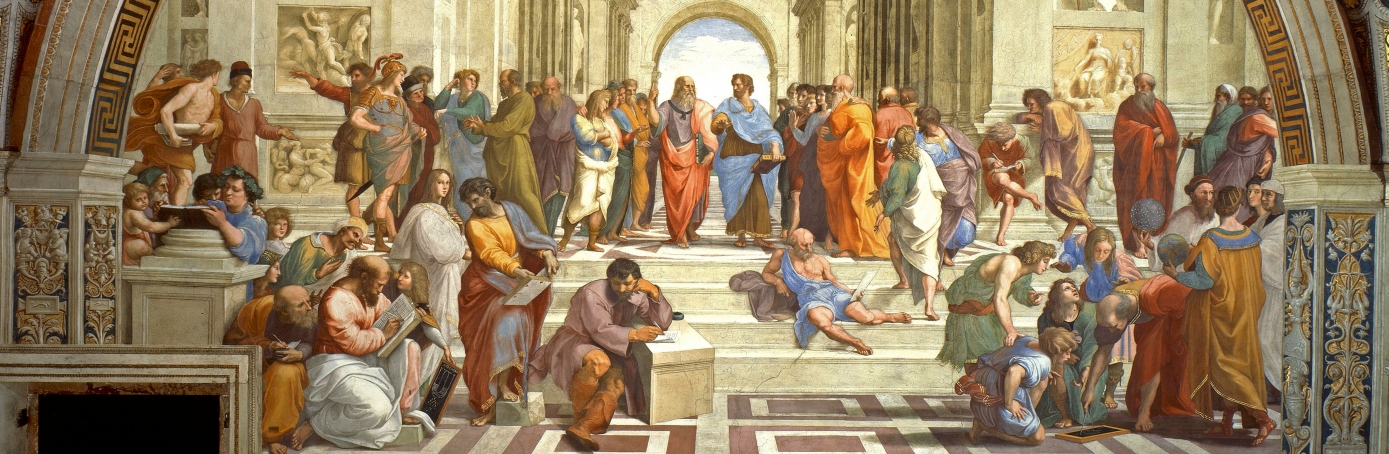
Artistic Developments And The Emergence Of Florence
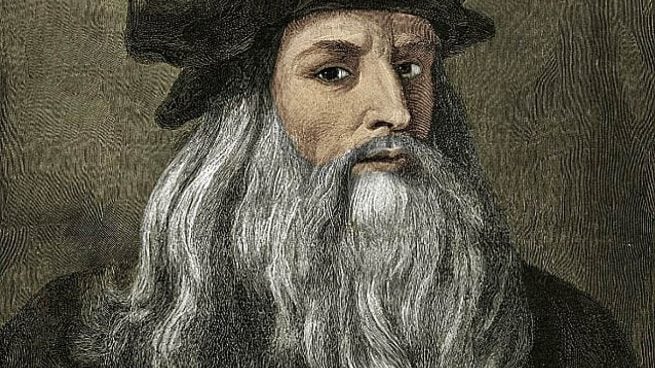
It was in art that the spirit of the Renaissance achieved its sharpest formulation. Art came to be seen as a branch of knowledge, valuable in its own right and capable of providing man with images of God and his creations as well as with insights into man’s position in the universe. In the hands of men such as Leonardo da Vinci it was even a science, a means for exploring nature and a record of discoveries. Art was to be based on the observation of the visible world and practiced according to mathematical principles of balance, harmony, and perspective, which were developed at this time. In the works of painters such as Masaccio, the brothers Pietro and Ambrogio Lorenzetti, Fra Angelico, Sandro Botticelli, Perugino, Piero della Francesca, Raphael, and Titian; sculptors such as Giovanni Pisano, Donatello, Andrea del Verrocchio, Lorenzo Ghiberti, and Michelangelo; and architects such as Leon Battista Alberti, Filippo Brunelleschi, Andrea Palladio, Michelozzo, and Filarete, the dignity of man found expression in the arts.
In Italy the Renaissance proper was preceded by an important “proto-renaissance” in the late 13th and early 14th centuries, which drew inspiration from Franciscan radicalism. St. Francis of Assisi had rejected the formal Scholasticism of the prevailing Christian theology and gone out among the poor praising the beauties and spiritual value of nature. His example inspired Italian artists and poets to take pleasure in the world around them. The work of the most famous artist of the proto-renaissance period, Giotto (1266/67 or 1276–1337), reveals a new pictorial style that depends on clear, simple structure and great psychological penetration rather than on the flat, linear decorativeness and hierarchical compositions of his predecessors and contemporaries, such as the Florentine painter Cimabue and the Siennese painters Duccio and Simone Martini. The great poet Dante lived at about the same time as Giotto, and his poetry shows a similar concern with inward experience and the subtle shades and variations of human nature. Although his Divine Comedy belongs to the Middle Ages in its plan and ideas, its subjective spirit and power of expression look forward to the Renaissance. Petrarch and Giovanni Boccaccio also belong to this proto-renaissance period, both through their extensive studies of Latin literature and through their writings in the vernacular. Unfortunately, the terrible plague of 1348 and subsequent civil wars submerged both the revival of humanistic studies and the growing interest in individualism and naturalism revealed in the works of Giotto and Dante. The spirit of the Renaissance did not surface again until the 15th century.


No hay comentarios.:
Publicar un comentario